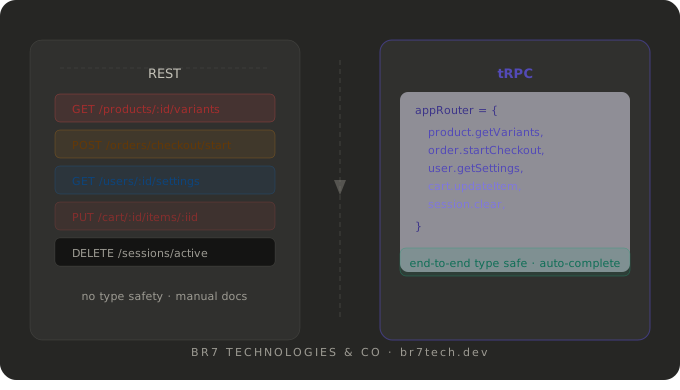
REST gave us flexibility at the beginning, but it also multiplied manual coordination as the company shipped more products. Every endpoint change required updates in backend handlers, frontend data layers, and contract docs that often lagged behind implementation.
The switch to tRPC was not about trend-chasing. It was about removing recurring friction between teams so we could ship faster without introducing hidden API drift.
Where REST started hurting us
The biggest issue was contract duplication. Endpoint schemas, response interfaces, and validation rules existed in multiple places and would inevitably diverge under sprint pressure.
Review cycles also slowed down because backend and frontend pull requests had to be merged in a strict order. A missed edge case could block two teams at once.
- Schema drift between OpenAPI notes and shipped payloads
- Versioning overhead for small iterative changes
- Increased runtime bugs from stale client assumptions
Migration strategy that avoided downtime
We did not replace everything at once. We introduced a shared tRPC router for new features while legacy REST endpoints remained active until each surface was fully moved.
This dual-stack period lasted six weeks and gave us a low-risk path for internal adoption and gradual refactoring.
- Start with internal dashboards before customer-critical flows
- Keep endpoint-level telemetry during overlap
- Add strict input parsing for every tRPC procedure
What changed after stabilization
Type-safe end-to-end contracts reduced regression issues immediately. Frontend developers no longer guessed payload structures, and backend changes surfaced compile-time feedback before release.
We also shortened review loops because contract and implementation now lived together instead of being synchronized across disconnected layers.
- Fewer integration bugs in cross-team releases
- Faster feature merges with less coordination overhead
- Clearer ownership of data contracts
tRPC is not a universal answer, but for our TypeScript-heavy stack it eliminated recurring coordination cost. The migration paid off because it was scoped, measured, and executed without forcing a risky full rewrite.